Inbound Voice AI: The UK Guide to AI Phone Receptionists for 2026

What Is Inbound Voice AI?
Inbound voice AI is a conversational AI system that answers your incoming phone calls automatically, in real time, using natural spoken language. The moment a caller dials your number, an AI voice calling agent picks up — no queue, no IVR menu, no voicemail. It listens to the caller, understands what they need using a large language model, looks up the caller in your CRM where possible, and either resolves the query directly or transfers to a human team member with a real-time summary of what has been said. For UK businesses receiving more than 200 inbound calls per month, inbound voice AI is now the highest-ROI technology investment available in customer operations — usually paying back implementation cost within two to four months. See also our AI inbound call agent setup guide.
How an Inbound AI Voice Calling Agent Works
Inbound voice AI works by combining four pieces of technology in real time. First, speech-to-text models like Deepgram or Whisper transcribe the caller's words as they speak — handling regional UK accents, background noise, and natural conversation patterns. Second, a large language model (typically GPT-4o or a tuned equivalent) interprets the transcript, identifies caller intent, and decides what to do. Third, neural text-to-speech engines like ElevenLabs convert the agent's response into natural-sounding speech with appropriate pacing and intonation. Fourth, an integration layer queries and writes to your CRM, booking system, or knowledge base in real time during the call. The whole cycle — caller speaks, agent thinks, agent responds — completes in under one second, making the conversation feel natural rather than robotic. Read our comparison of ElevenLabs vs VAPI vs custom voice AI for a deeper look at the platform options.
What Inbound Voice AI Actually Does on a Call
The strongest inbound voice AI deployments handle a defined set of high-volume call types end-to-end, with a clean escalation path for anything outside that scope. Common patterns:
- Appointment booking and rescheduling — check availability in real time, capture caller details, book the appointment directly into your scheduling system, send confirmation by SMS or email.
- Customer support FAQs — answer questions about opening hours, services, pricing, order status, or account information using a retrieval-augmented knowledge base.
- Lead qualification and routing — interview inbound prospects against your qualification criteria, score them, and either book a meeting directly or transfer to the right salesperson.
- Message taking and call-back scheduling — capture structured messages with caller details, reason for call, and urgency, and log them to your CRM or ticketing system instantly.
- Intelligent transfer with summary — for anything outside the agent's scope, transfer the call to the right human team member with a real-time summary of what has already been discussed, so callers never repeat themselves.
Learn more about deployment patterns in our inbound AI voice agent service.
Inbound Voice AI vs Traditional Call Handling Options
UK businesses typically choose between four inbound call handling models. In-house reception gives you control and brand consistency but limits availability to business hours, queues at peak times, and costs £25,000 to £40,000 fully-loaded per reception headcount. Outsourced virtual receptionist services extend hours but operate from a shared pool with limited knowledge of your business and per-minute pricing that scales linearly with call volume (typically £1.00 to £2.50 per minute). Voicemail and call-back is the lowest-cost option but loses 30 to 45% of inbound opportunities to callers who never call back. Inbound voice AI is available 24/7, has zero queue time, knows your business in detail, integrates directly with your systems, and runs at £0.05 to £0.15 per call-minute. For most UK businesses past a modest call-volume threshold, the economics make inbound voice AI the clear choice.
What Inbound Voice AI Costs in the UK
UK inbound voice AI implementation costs in 2026 typically fall into three bands. A focused single-use-case agent — for example, inbound appointment booking only, or out-of-hours overflow only — costs £1,000 to £5,000 to design, build, integrate, and test. A multi-use-case primary agent handling several call types end-to-end costs £5,000 to £15,000. A complex enterprise deployment with bespoke telephony integration, multi-language support, or sector-specific compliance requirements costs £15,000 to £40,000. Ongoing per-call costs are typically £0.05 to £0.15 per minute — covering speech-to-text, LLM usage, text-to-speech, and call infrastructure. Most UK businesses see implementation cost recovered within two to four months purely from reception cost reduction, with additional revenue benefits from recovered missed calls and improved caller experience on top.
Industries Where Inbound Voice AI Delivers the Best Returns
Healthcare and Medical Practices
Medical practices, dental surgeries, and clinics handle high inbound volume — most of it predictable: appointment bookings, prescription queries, reminders. Inbound voice AI typically reduces reception call load by 60 to 70%, cuts no-show rates by 20 to 35% through automated reminders, and extends booking availability to evenings and weekends. See our healthcare voice AI deployment guide.
Property and Lettings
Property and lettings agencies receive a continuous stream of viewing requests, tenancy queries, and maintenance reports. An inbound voice AI agent qualifies enquirers, books viewings into agent calendars, captures maintenance details with photos via SMS follow-up, and routes anything urgent to a human immediately. Read our guide to voice AI for real estate lead qualification.
Home Services and Field Operations
Plumbers, electricians, locksmiths, and other home service operators lose substantial revenue to missed out-of-hours calls — typically 30 to 45% of after-hours callers do not call back the next day. An inbound voice AI agent answers every call, triages emergency vs scheduled work, captures booking details, and routes to the on-call engineer. Most home services businesses recover the implementation cost within the first quarter purely from previously-missed bookings.
Professional Services
Solicitors, accountants, and consultants need to qualify every inbound enquiry before allocating senior time to it. An inbound voice AI conducts a structured first-contact conversation, captures key matter details, and either books a paid consultation directly or routes to the right team member with full context.
E-commerce and Direct-to-Consumer
E-commerce brands receive high volumes of structured queries — order status, returns, delivery dates, sizing questions. An inbound voice AI resolves 75 to 85% of these instantly without human involvement, with full integration into your order management system.
Compliance and UK GDPR for Inbound Voice AI
Inbound voice AI deployed in the UK must comply with UK GDPR, with appropriate caller disclosures, lawful basis for any personal data processing, and clear retention policies for call recordings and transcripts. Best practice is to inform callers at the start of every call that they are speaking with an AI agent (and to confirm if asked), record only what is necessary, and delete recordings on a defined retention schedule. For sectors with additional regulatory requirements — financial services, healthcare, legal — bespoke compliance architecture is integrated from day one. We build every inbound voice AI deployment with these requirements as a first-class concern, not as an afterthought.
AI Inbound Voice Agent vs AI Inbound Call Agent: What Is the Difference?
Businesses researching this space often see the terms "ai inbound voice agent", "ai inbound agent", and "ai inbound call agent" used interchangeably — and in practice they describe the same underlying technology from slightly different angles. An ai inbound agent is the general term for any AI system that handles incoming interactions on your business's behalf. An ai inbound call agent specifically emphasises the telephony use case — answering and handling phone calls rather than chat or email. An ai inbound voice deployment is the same system described from the caller's perspective: what they hear and speak to is a natural voice, not a menu. All three point to the same architecture described above — speech-to-text, an LLM for reasoning, text-to-speech for the response, and live integration with your business systems. The distinction that actually matters when evaluating providers is not the terminology but the depth of the integration: an ai inbound voice agent that can only answer FAQs is a much weaker deployment than one that can look up a caller in your CRM, check real-time availability, and take action during the call.
How to Get Started With Inbound Voice AI
The typical inbound voice AI deployment runs in three phases over four to six weeks. Phase one is discovery and call-flow design — we listen to a sample of your existing inbound calls, identify the call types best suited to AI handling, and design conversation flows for each. Phase two is build and integration — we configure the agent on your chosen platform, integrate it with your CRM and booking systems, and run end-to-end tests with realistic call scenarios. Phase three is parallel go-live — the agent handles a defined slice of inbound calls alongside your existing reception for two weeks, with daily quality reviews, before full cut-over. To see an inbound voice AI agent handle a sample of your call types and get a clear implementation proposal, book a free demo.
Frequently Asked Questions
What is an ai inbound voice agent and how is it different from a chatbot?
An ai inbound voice agent handles real phone calls using natural spoken conversation, while a chatbot handles typed text on a website or messaging app. The underlying reasoning is similar, but an ai inbound voice agent must also manage speech recognition, natural-sounding speech synthesis, and the real-time pacing of a live phone conversation — which is why voice deployments typically take longer to get right than a text chatbot.
Can an ai inbound agent handle calls in a UK regional accent?
Yes. Modern speech-to-text models used in production ai inbound agent deployments are trained on a wide range of UK regional accents and handle background noise and natural conversational speech patterns reliably. We test every deployment against a sample of real call recordings from your business before go-live to confirm accuracy on your specific caller base.
How is an ai inbound call agent priced compared to a human receptionist?
An ai inbound call agent typically runs at £0.05 to £0.15 per call-minute, compared to £1.50 to £3.00 per minute fully-loaded for a UK-based human receptionist. Most UK businesses recover the £1,000 to £15,000 implementation cost of an ai inbound call agent within two to four months through reduced reception headcount and recovered missed calls.
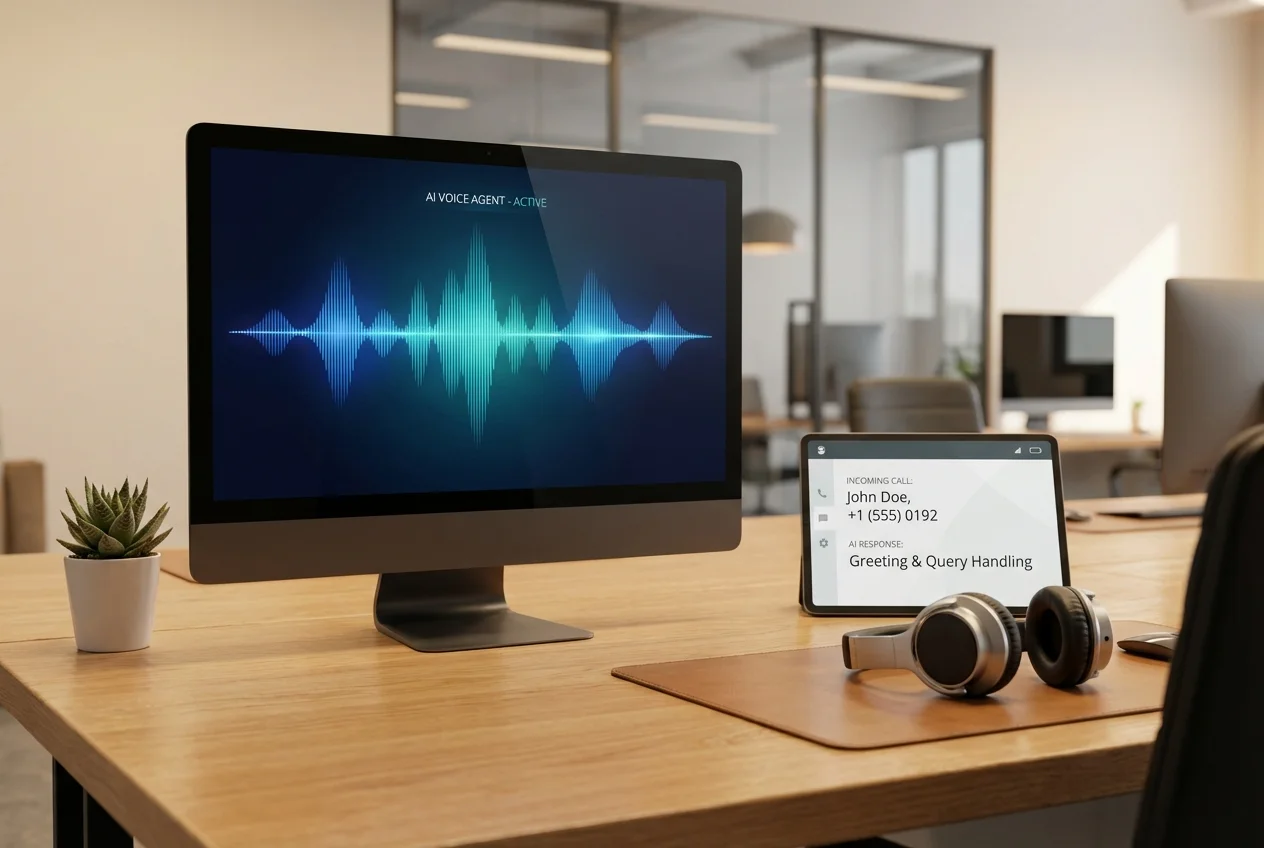 AI Voice Agents for Inbound Calls
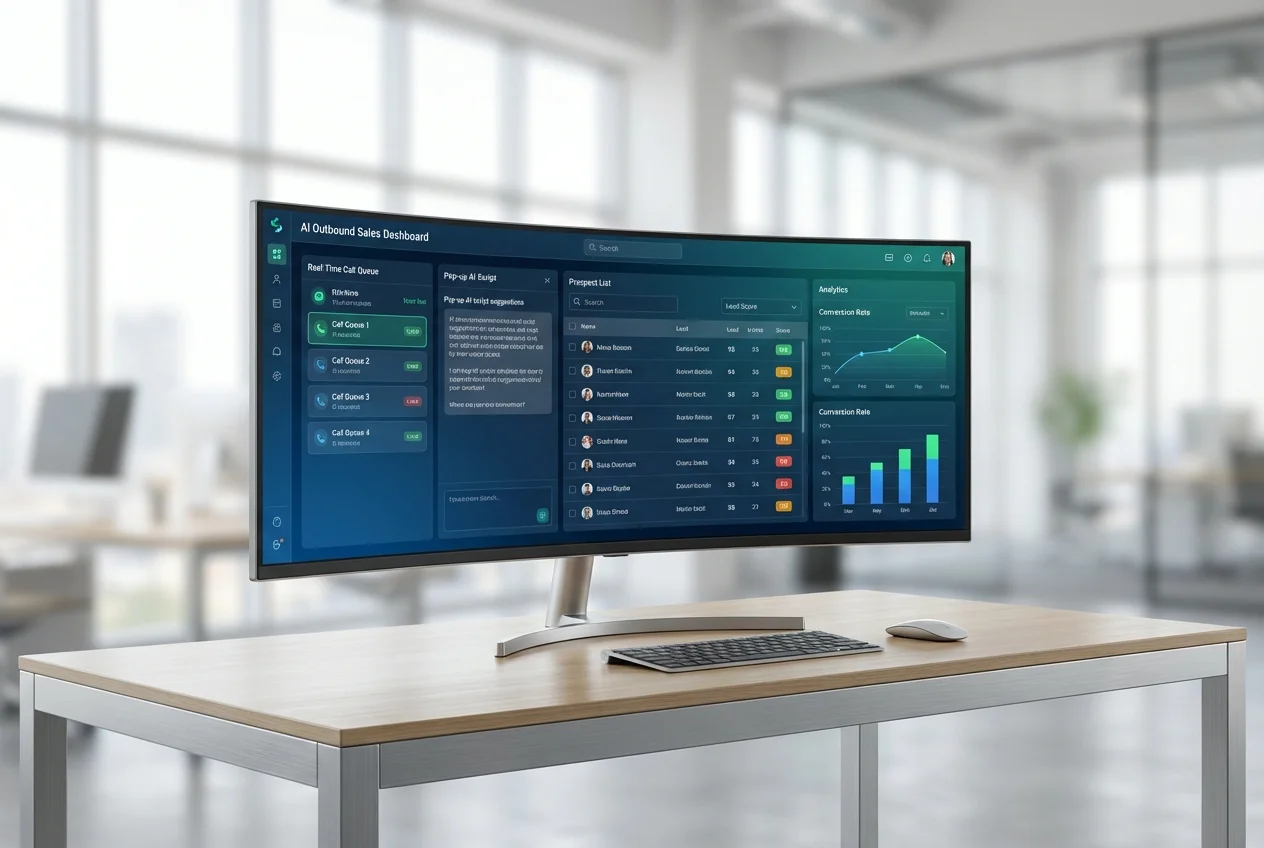 AI Voice Agents for Outbound Sales
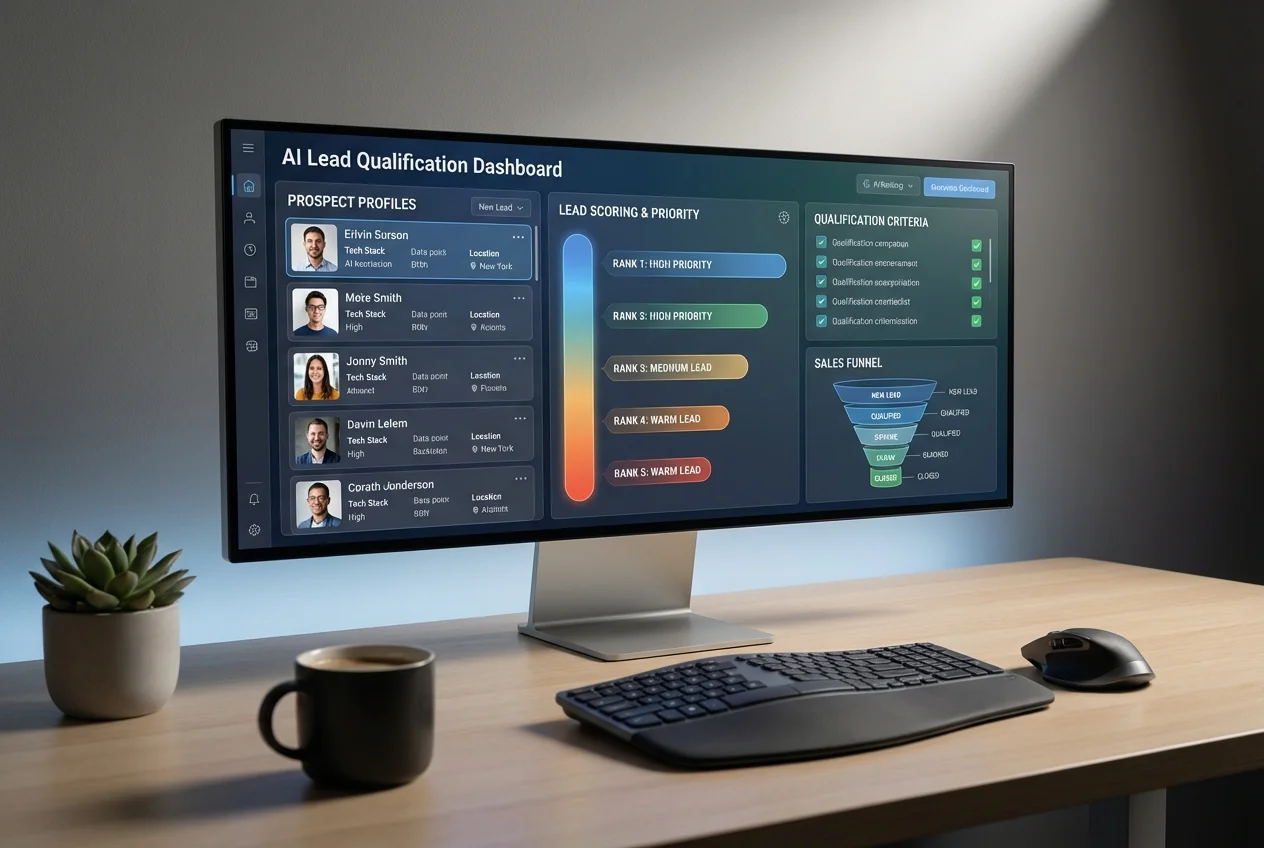 Lead Qualification Agents